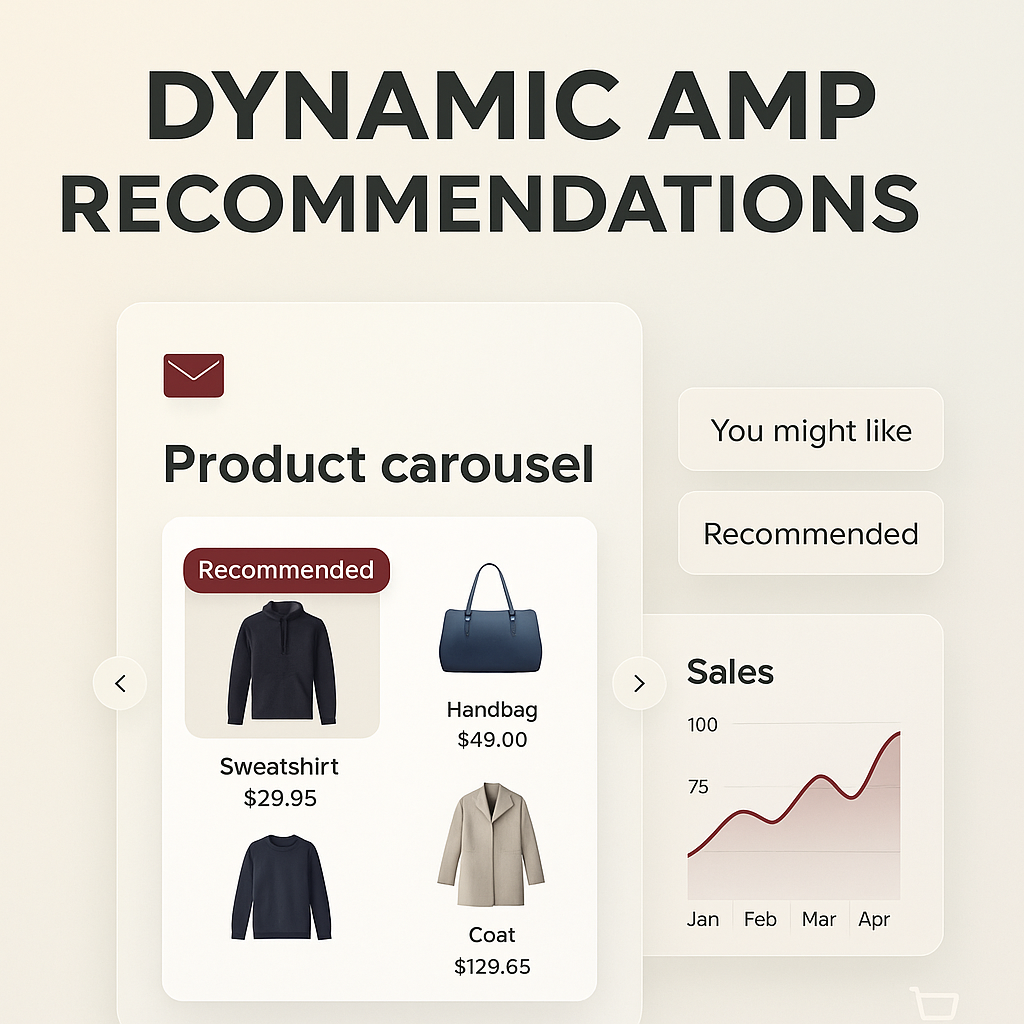
Implementing Dynamic Product Recommendations in AMP Emails: Techniques for Personalized Shopping Experiences and Increased Sales
Tanmay Kejriwal
Co-Founder & CTO
Introduction
In the fast-evolving world of email marketing, staying ahead of the curve is essential for both e-commerce businesses and marketers. One of the most groundbreaking advancements in this arena is the use of AMP (Accelerated Mobile Pages) emails. These interactive emails offer a dynamic experience that traditional static emails simply cannot match. A particularly powerful feature of AMP emails is the ability to implement dynamic product recommendations. This not only personalizes the shopping experience but can also significantly increase sales.
In this blog post, we'll explore how to implement dynamic product recommendations in AMP emails, discuss the techniques involved, and highlight the benefits for your e-commerce business. We'll also provide actionable tips and examples to help you get started.
Why AMP Emails?
What Are AMP Emails?
AMP emails allow recipients to interact directly within the email without needing to click through to a website. This can include actions such as filling out forms, RSVPing to events, and, crucially for e-commerce, browsing and interacting with product recommendations.
Benefits of AMP Emails
- Increased Engagement: By allowing users to interact directly within the email, AMP emails can significantly boost engagement rates.
- Enhanced Personalization: Dynamic content, such as product recommendations, can be tailored to each recipient, improving the relevance of your communications.
- Higher Conversion Rates: With the ability to act immediately within the email, users are more likely to convert.
Implementing Dynamic Product Recommendations
Techniques for Personalization
1. Data Collection and Analysis
To make personalized recommendations, start by collecting data on user behavior, preferences, and purchase history. This data can be gathered through:
- Website analytics: Track user interactions on your website to understand their interests.
- Previous purchases: Use historical purchase data to predict future buying behavior.
- Email interactions: Analyze how users interact with your previous emails to tailor future content.
2. Machine Learning Algorithms
Implement machine learning algorithms to analyze the data and provide product recommendations. These algorithms can identify patterns and trends, allowing you to offer the most relevant products to each recipient.
3. Real-Time Dynamic Content
AMP emails can display real-time content, meaning that product recommendations can be updated at the time of opening the email. Use tools like Taplo to integrate real-time dynamic content seamlessly into your AMP emails. This ensures that product recommendations are always current and relevant.
Practical Tips for Implementation
- Segment Your Audience: Divide your audience into segments based on behavior, preferences, and demographics. This allows for more targeted and effective recommendations.
- A/B Testing: Test different recommendation strategies to see which ones yield the best results. A/B testing can help refine your approach and improve performance over time.
- Utilize AMP Components: Make use of AMP components such as `<amp-carousel>` for product galleries and `<amp-list>` for fetching and displaying data dynamically.
Use Cases and Examples
Use Case 1: Upselling and Cross-Selling
Incorporate dynamic product recommendations for upselling and cross-selling directly within the email. For example, if a customer recently purchased a smartphone, recommend accessories like cases or headphones.
Use Case 2: Abandoned Cart Recovery
Send AMP emails with dynamic product recommendations based on the items left in a user's cart. This personalized reminder, coupled with similar product suggestions, can entice customers to complete their purchase.
Use Case 3: New Product Launches
When launching a new product, use AMP emails to recommend these items to customers who have shown interest in similar products or categories. This not only boosts awareness but also encourages early sales.
Challenges and Considerations
Technical Complexity
Implementing AMP emails with dynamic content requires technical expertise. Collaborate with developers to ensure seamless integration and functionality.
Email Client Support
While AMP emails offer numerous benefits, not all email clients support them yet. It's crucial to provide fallback options for non-AMP-compatible clients to ensure all recipients receive a functional email.
Data Privacy and Compliance
Ensure that your data collection and usage comply with privacy regulations such as GDPR. Transparency with users about how their data is used is essential for maintaining trust.
Conclusion
Implementing dynamic product recommendations in AMP emails is a powerful way to enhance the shopping experience and drive sales. By leveraging the interactivity of AMP and personalizing content based on user data, e-commerce businesses can increase engagement and conversion rates. While there are challenges to overcome, the potential benefits make it a worthwhile investment for those looking to optimize their email marketing strategy.
For businesses ready to harness the power of AMP emails, tools like Taplo can simplify the creation of interactive, dynamic content, ensuring you stay ahead in the competitive world of e-commerce. Embrace the future of email marketing and watch your sales soar!