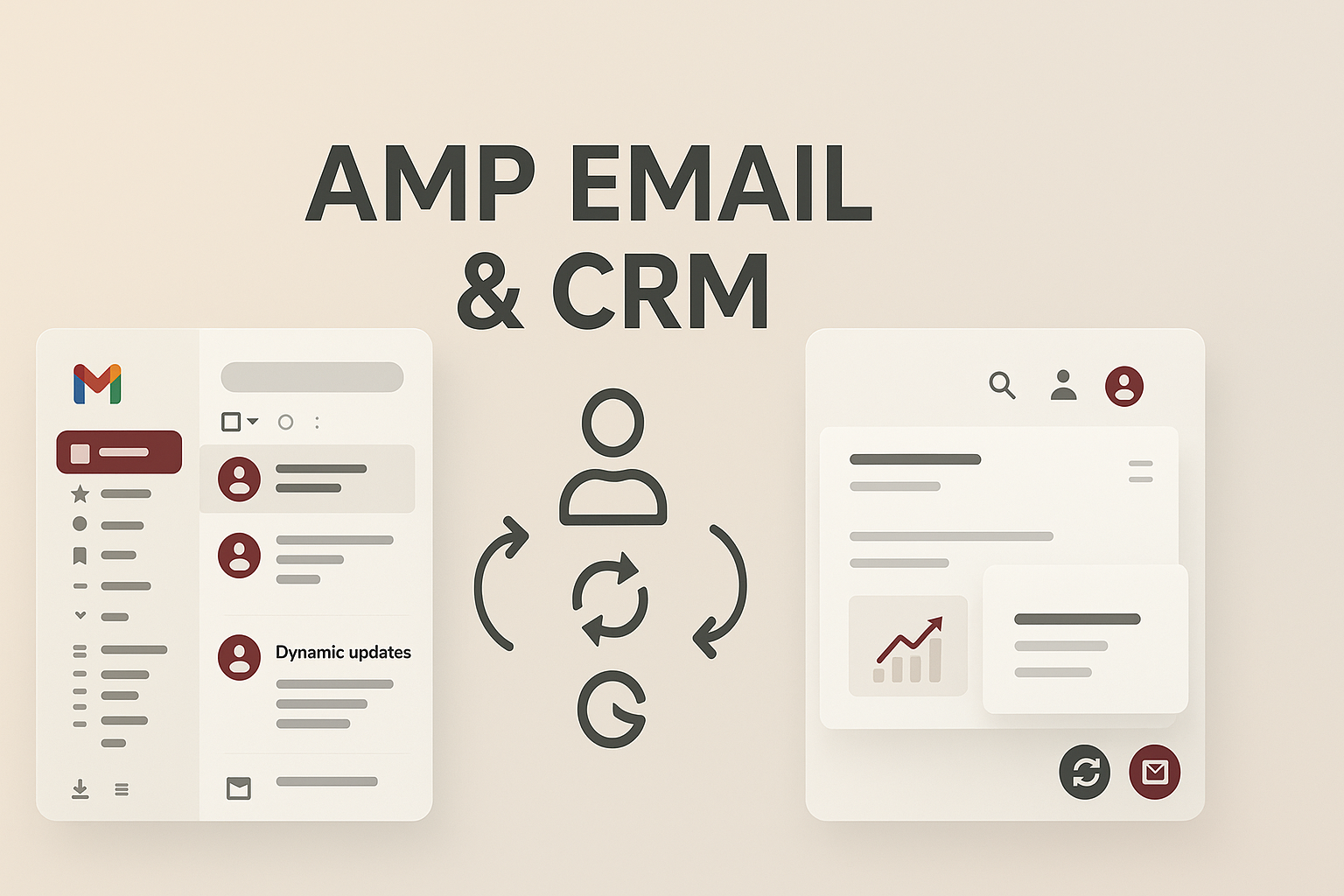
Optimizing AMP Emails for Seamless Integration with CRM Systems: Enhancing Data Synchronization and Personalized Customer Interactions
Alberto Gaucin
Co-Founder & CEO
Introduction
In today's fast-paced digital environment, email marketing has evolved from simple newsletters to dynamic, interactive experiences. At the heart of this transformation are AMP emails, which enable real-time updates and seamless interactivity within the email itself. For e-commerce businesses and developers, integrating AMP emails with CRM systems is crucial for maintaining data synchronization and delivering personalized customer interactions. This blog post explores the best practices for optimizing AMP emails to enhance your email marketing strategy.
Understanding the Power of AMP Emails
AMP (Accelerated Mobile Pages) technology has revolutionized how we interact with emails. By embedding interactive elements directly within the email, AMP emails allow users to engage without having to leave their inbox. This capability is especially beneficial for e-commerce businesses, where immediate actions like purchasing, booking, or providing feedback can significantly boost conversion rates.
Key Benefits of AMP Emails
1. Enhanced Interactivity: Users can fill forms, RSVP to events, or browse product catalogs directly from their email. 2. Real-time Content: Information such as product availability, pricing, and promotions can be updated in real-time. 3. Improved Engagement: Interactive content leads to higher engagement rates, increasing the likelihood of conversion.
Integrating AMP Emails with CRM Systems
For email marketers, the integration of AMP emails with CRM systems is essential for data synchronization and delivering personalized experiences. Here’s how you can achieve seamless integration:
Step 1: Choose the Right CRM System
Not all CRM systems are created equal when it comes to handling AMP emails. Ensure your CRM supports dynamic content and can manage real-time data updates. Popular CRM systems like Salesforce, HubSpot, and Zoho CRM offer robust integration capabilities that can handle the complexities of AMP emails.
Step 2: Use APIs for Data Synchronization
APIs are the backbone of data synchronization between AMP emails and CRM systems. They facilitate the real-time exchange of customer data, ensuring that your emails are always up-to-date with the latest information. Implementing APIs can help you:
- Update customer data instantly as interactions occur.
- Track user behavior from emails to inform future marketing strategies.
- Personalize content based on CRM data, ensuring that each recipient receives relevant information.
Step 3: Leverage Personalization for Customer Engagement
With data synchronization in place, you can create highly personalized email experiences. Personalized emails have been shown to increase open rates and conversions significantly. Here are some ways to personalize AMP emails:
- Dynamic Content: Use CRM data to display personalized product recommendations or tailored offers.
- Custom Interactive Elements: Create interactive elements that adapt based on user preferences stored in the CRM.
- Behavioral Triggers: Send follow-up emails based on interactions with previous AMP emails, enhancing the customer journey.
Practical Tips for Implementing AMP Emails
Design Considerations
- Responsive Design: Ensure that your AMP emails are mobile-friendly, as a significant portion of users will access their emails via smartphones.
- Minimalist Approach: Keep the design clean and focused on the key interactive elements to prevent overwhelming the recipient.
Testing and Optimization
- A/B Testing: Continuously test different interactive elements and content variations to determine what resonates best with your audience.
- Performance Monitoring: Use analytics to track the performance of AMP emails and make data-driven decisions for optimization.
Security Measures
- Authentication: Ensure your emails are authenticated (e.g., using SPF, DKIM) to avoid being flagged as spam.
- Data Privacy: Comply with data protection regulations such as GDPR by ensuring customer data is handled responsibly.
Use Cases and Examples
E-commerce Product Recommendations
Imagine an e-commerce business sending AMP emails with real-time product recommendations. As users interact with the email, their behaviors are tracked and updated in the CRM, allowing for more precise targeting in future campaigns.
Event Invitations
For event organizers, AMP emails can provide dynamically updated RSVP forms. As attendees respond, their information is synchronized with the CRM, making it easier to manage guest lists and personalize follow-up communications.
Customer Feedback
Incorporate feedback forms within AMP emails to gather customer insights directly. Responses are instantly updated in the CRM, providing valuable data for improving products and services.
Introducing Taplo for Interactive Emails
To streamline the creation of interactive emails, consider using solutions like Taplo. Taplo offers tools specifically designed for building engaging AMP emails that integrate seamlessly with your CRM, enabling you to focus on crafting personalized experiences without the technical hassle.
Conclusion
Optimizing AMP emails for seamless integration with CRM systems is a game-changer for email marketers and e-commerce businesses. By ensuring data synchronization and leveraging personalization, you can create interactive email experiences that not only engage but also convert. As you implement these strategies, remember to continuously test and optimize your approach for the best results.
With the right tools and practices, your email marketing can evolve into a powerful channel for building lasting customer relationships. Embrace the future of interactive emails and watch your engagement and conversion rates soar.